Infant Massage for Reflux: Simple Ways to Soothe Acid Pain
Most parents reach for medication first, but what if your hands hold the real answer? Infant massage isn’t just comfort—it’s a clinically supported method to ease reflux pain while deepening your connection with your baby. Discover which specific strokes transform distress into calm, and why paediatricians are quietly recommending this technique to desperate parents. Your baby’s relief might be simpler than you think.
Understanding Infant Reflux and Its Impact on Your Baby’s Comfort
Comprehending infant reflux can feel like steering through a turbulent sea, filled with waves of uncertainty and concern. As you witness your little one spitting up, gagging and crying, it’s natural to wonder how it affects their comfort. Infant reflux isn’t a rare condition; it’s a common challenge, often linked to an immature oesophagus. You might notice your baby arching their back or fussing mid-feed. This discomfort can feel overwhelming for you both. Amid this struggle, have you considered infant massage for reflux? This gentle touch offers not just relief but also an opportunity to deepen your bond through secure attachment and nurturing touch. Many infants with reflux symptoms, particularly happy spitters, will outgrow this by their first birthday, bringing some reassurance amidst the challenges.
How to Safely Massage Your Baby for Reflux Relief?
- Choose the Right Time: Wait for calm moments, avoiding massage after feeds when discomfort may arise.
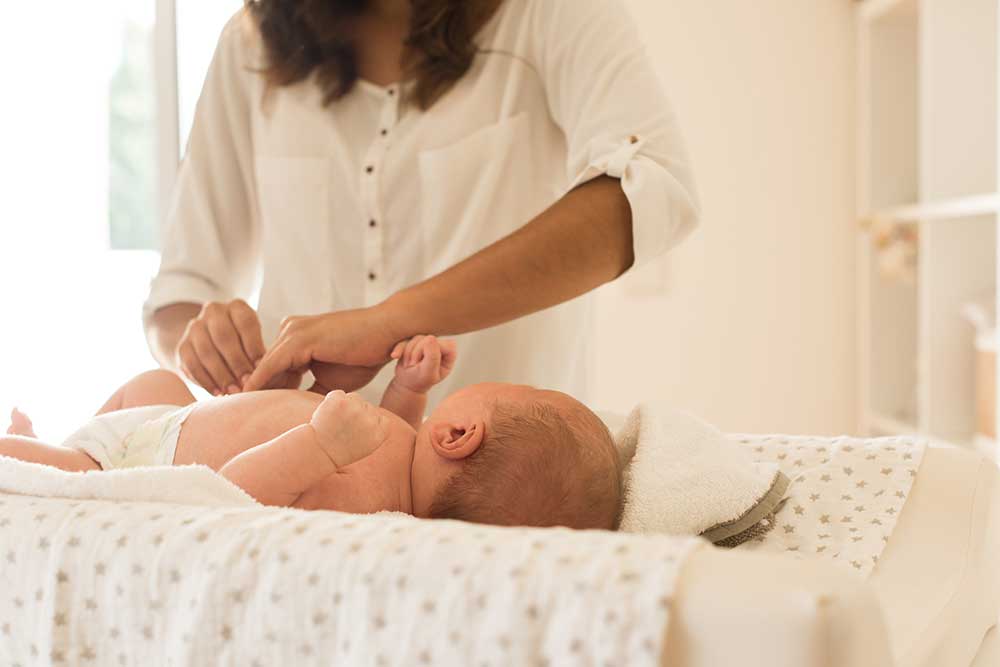
- Create a Comfortable Environment: Use a soft towel in a warm, quiet room, cradling your baby in a slight recline.
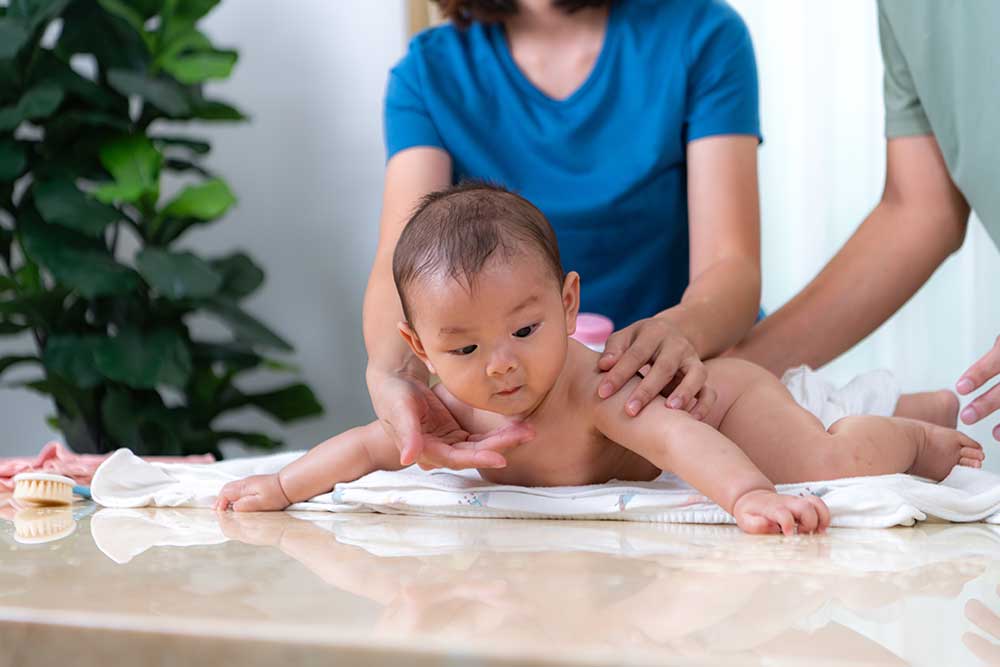
- Use Gentle Touch: Start with light pressure, focusing on their limbs, while steering clear of direct pressure on the abdomen. Studies have shown that non-pharmacological interventions can provide relief for infants with reflux. Nurturing touch through infant massage has been recognised as an effective way to support your baby’s emotional and physical comfort.
- Stay Alert to Signals: Watch for signs of distress, and stop if your baby seems uncomfortable.
Your dedication to infant massage for reflux speaks volumes about your love and commitment.
Five Gentle Techniques for Infant Massage That Alleviate Reflux Symptoms
Five gentle techniques can be a life-changing factor in alleviating your baby’s reflux symptoms.
First, try abdominal clockwise strokes; this nurturing motion follows the colon’s natural path.
Second, engage in leg bicycling—bending one leg at a time can provide gentle relief.
Next, offer soothing back massages while holding your little one, creating a sense of safety.
Long strokes along their limbs promote relaxation, easing their discomfort.
Finally, always remember to keep pressure gentle and adjust based on your baby’s cues.
These techniques work best when practised consistently, as the five-week structure allows gradual learning of touch language and prevents over-stimulation.
Each infant reflux massage moment can deepen your bond, turning feeding into a cherished experience.
Isn’t it beautiful how simple touch can hold such power?
Accept these techniques, pouring love into every gentle stroke.
Understanding Your Baby’s Signals During Massage
Every gentle stroke you share with your baby during massage is imbued with a deep ability to communicate.
Every soothing touch during your baby’s massage speaks volumes, fostering a unique bond through gentle connection and understanding.
It’s essential to comprehend your baby’s signals to guarantee a safe and soothing baby reflux massage. When you pay attention, you’ll notice:
- Ready Signals: Calm face, relaxed body, and soft cooing suggest openness.
- Pause Cues: Frowning or turning away indicates the need for a break.
- Stop Signs: Crying or pulling away shows your baby wants to disengage.
- Reflux Behaviours: Arching the back or fussing can signal discomfort.
Through nurturing touch and attentive observation, you empower yourself to respond to your baby’s unique needs with confidence and care.