Blog Post Intro:
Most parents dismiss baby wind as inevitable suffering. What if it wasn’t? A simple technique—one that takes just minutes and costs nothing—can transform your baby’s fussiness into genuine comfort while deepening your connection. This gentle tummy massage method works with your baby’s natural digestion, not against it. The best part? Your baby actually wants you to do this. Learn which strokes ease discomfort, when to apply them, and what signs tell you it’s working. The relief your baby needs might be right at your fingertips.
How to Calm Your Baby for Tummy Massage?
How can you create the perfect atmosphere for your baby’s tummy massage? To begin, make certain the room is warm and inviting to help your little one relax.
Dim the lights and play gentle music to promote a soothing environment. Choose a moment when your baby is calm and alert, ideally after a feed and a brief wait. 🍼 It is important to watch for readiness signals. If they seem fussy or stiff, it is better to pause. Touch enhances bonding experiences and using soft, slow strokes while maintaining eye contact helps build trust. Your relaxed demeanour sets the tone, as babies are responsive to stress hormone regulation through your calm presence.
Gentle Techniques for Gas Relief
Creating a calm and inviting atmosphere for your baby’s tummy massage sets the stage for healing.
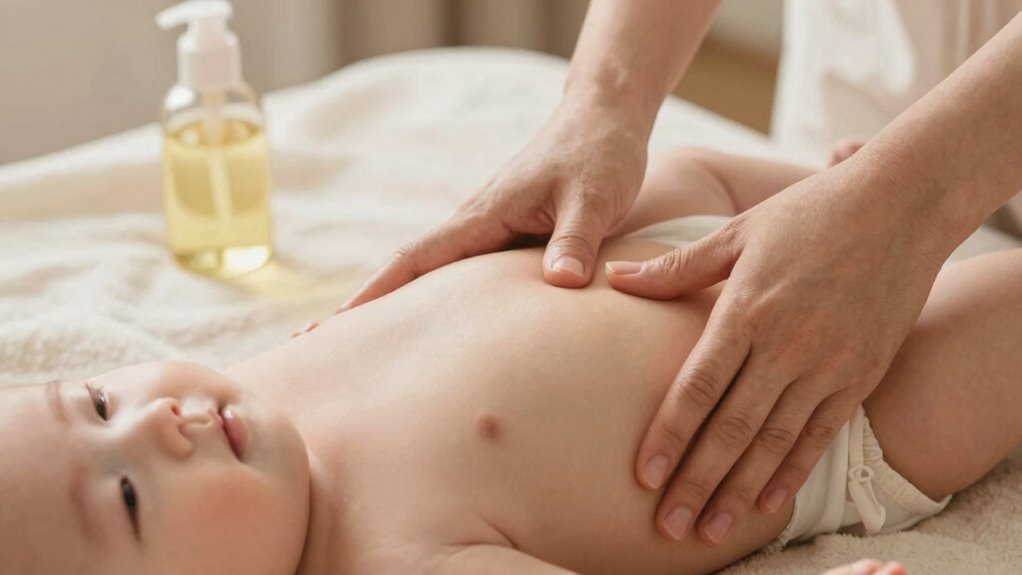
To effectively massage a baby’s tummy for trapped wind, start with gentle clockwise circles on the abdomen. This motion mimics your baby’s natural digestion, guiding trapped wind towards relief. These techniques are part of nurturing touch practices that support your baby’s comfort and well‑being.
“Gently massage your baby’s tummy in clockwise circles to mimic digestion and ease gas discomfort.”
The “I‑L‑U” strokes can also work wonders, tracing a soothing pattern across their belly. Remember, a light touch is essential—your baby deserves comfort above all. Frequent burping after feeds can also alleviate discomfort by releasing trapped air.
As you massage, try adding slow leg motions, like gentle bicycling, to encourage further wind release.
With each loving stroke, you’re not just easing discomfort; you’re nurturing a deep bond. 💖 Your attentive care changes uneasy moments into serene connections—how beautiful is that?
Trust these techniques and watch your little one thrive!
Recognising Your Baby’s Cues
As you traverse the tender expedition of parenthood, understanding your baby’s cues becomes an essential language of love.
Your little one may express discomfort through fussiness, squirming, or pulling their legs up towards the chest—these are signs to observe.
Do you notice a bloated tummy, gurgling sounds, or clenched fists? These cues signal it’s time to engage in that soothing baby tummy massage for gas.
You’ll uncover how to massage an infant’s tummy for gas with sensitivity and care.
Remember, a calm baby between episodes might still be carrying gas discomfort.
Trust yourself to read these signals; your gentle touch can bring them comfort.
Through nurturing touch, you foster a secure bond with your baby while providing relief from their physical discomfort.
In this sacred expedition, every little cue is a bridge connecting your heart to theirs.
Benefits of Regular Tummy Massages for Your Baby
Engaging in regular tummy massages can alter your baby’s experience, nurturing not just their physical comfort but also weaving deep emotional bonds between you both.
Regular tummy massages enhance your baby’s comfort while deepening the emotional connection between you both.
It’s a beautiful practice that supports your child’s overall well-being.
Consider these benefits:
- Easier Digestion: Gentle strokes follow the natural paths of your baby’s intestines, promoting comfort.
- Gas Relief: Techniques like the “I Love You” stroke can help move trapped air, easing discomfort.
- Improved Sleep: Regular massage, especially before bedtime, may induce longer, more restful sleep.
Research demonstrates that nurturing touch can lower cortisol levels in infants, reducing stress during their early development.
As you learn how to rub baby tummy for gas or massage newborn tummy for gas, remember that every moment spent nurturing your baby strengthens your connection.
Welcome this sacred act, and witness the beautiful evolution unfold.