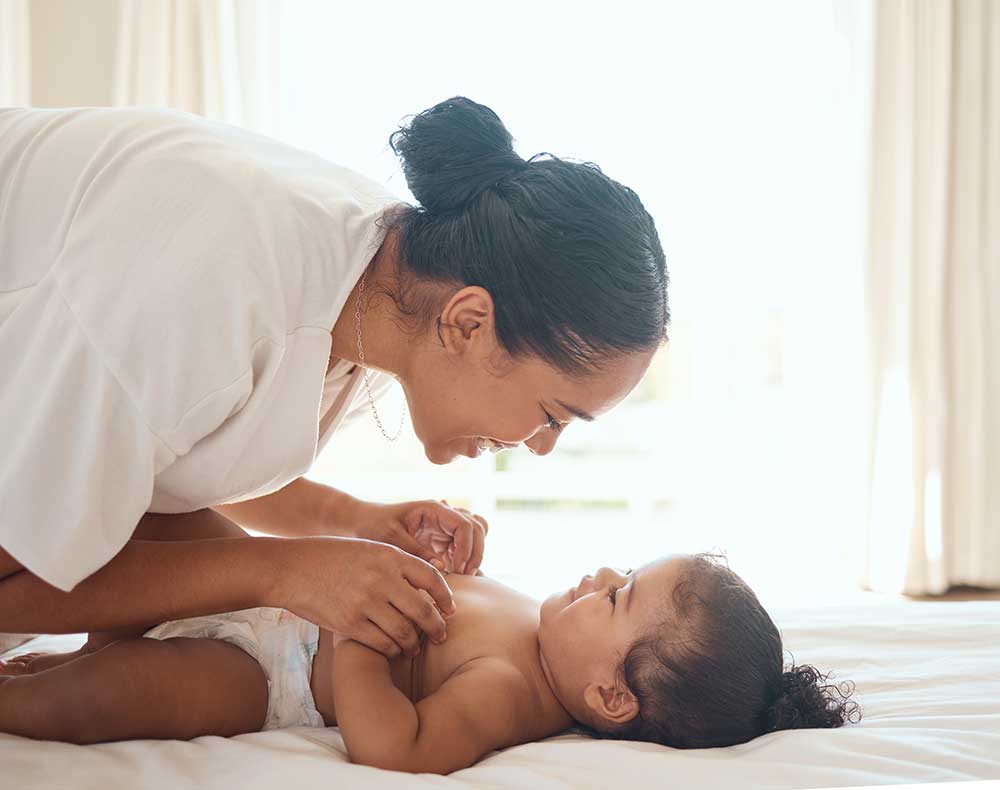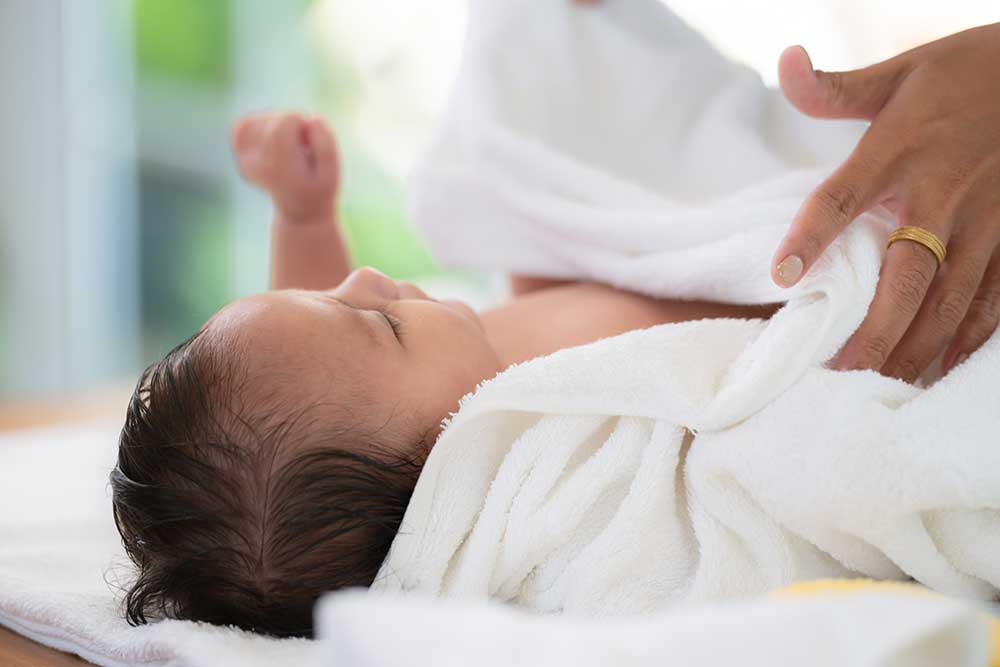

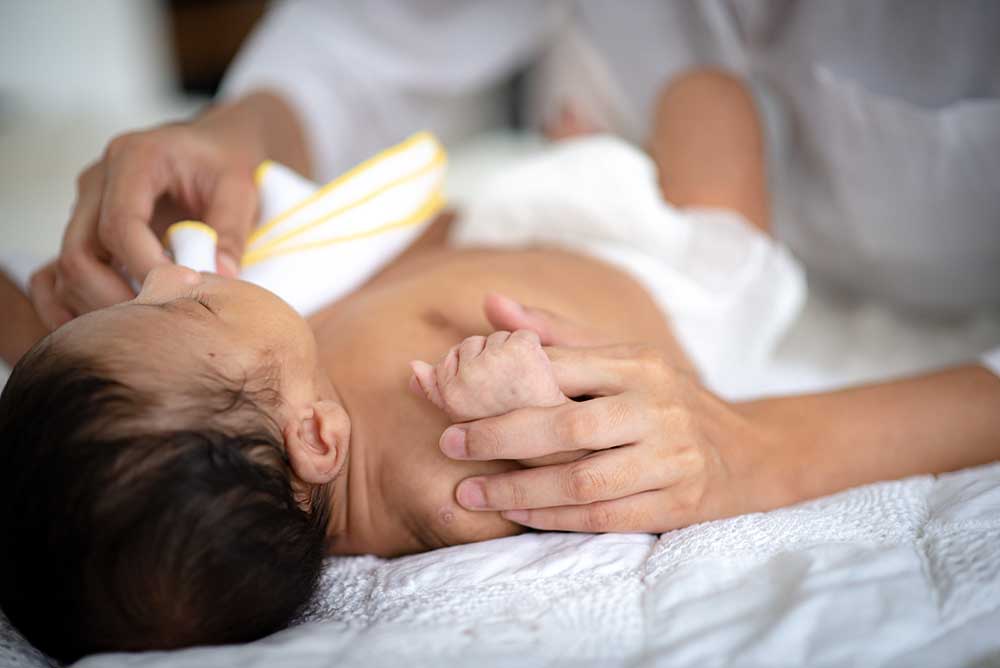
Your baby’s tears during massage might mean you’re doing something wrong—or exactly right. Most parents assume crying equals failure, but what if that cry is actually your little one communicating boundaries you need to understand? Discover the counterintuitive moves that transform meltdowns into moments of deep connection, turning frustration into the foundation for genuine trust and safety.
Why Does Your Baby Cry During Massage?
As you begin the beautiful voyage of infant massage, you might wonder why your baby cries during these tender moments.
It’s crucial to remember that their sensitive nervous systems can become overwhelmed. New sights and sounds might feel intense for them. Are they hungry or too full? A delicate balance impacts their comfort.
Consider these factors:
- Overstimulation: A busy day may cause distress.
- Discomfort: Their skin needs gentle touch; anything else might irritate.
- Temperature: Verify the room’s cosy and pleasant.
- Tiredness: A well-timed massage makes for happier moments. Additionally, baby massage can help relieve common discomforts like gas and teething pain, making it a beneficial practice overall.
Trust that through this nurturing connection, you’re cultivating comprehension and respect. Infant massage promotes secure attachment between you and your baby, strengthening the foundation of your relationship.
Your love helps them adjust, offering solace as you share this deep journey together.
How to Soothe Your Baby Mid-Session
Crying during a massage session can feel disheartening, but it’s important to remember that this is a natural part of your baby’s experience. Welcome this moment with love and patience.
When your little one fusses, try gentle strokes like the water wheel technique to relieve gas. A soothing rock or sway can also offer comfort. Positioning matters, so fold their arms across their chest and cradle them lovingly. Swaddling tightly for comfort can also create a sense of security during these moments.
Isn’t it incredible how touch can heal? Remember, responding to their cues nurtures a secure bond. Engage in rhythmic, calming motions, and watch their distress melt away. These techniques are part of comprehensive infant massage training that helps caregivers support their babies’ emotional and physical development.
Touch has the power to heal; by responding to cues, you nurture a bond that soothes and comforts.
Your nurturing presence is a beautiful gift. 💖 As the gentle touch brings serenity, consider how your love intertwines with their growth, creating a mosaic of cherished memories.
Timing Your Baby’s Massage
Avoid massaging during active alert states, where they may become overstimulated.
Instead, consider evening sessions, following bath time, to establish a soothing bedtime routine. Quiet alert is often the best state for massage, as babies are calm and receptive. Baby-led classes accommodate natural variations in your infant’s state, allowing you to practice at home when your baby is most receptive.
Remember, consistency builds comfort. Aim for 10-15 minute sessions 1-2 times daily, ideally between feeds.
Your loving touch creates a world of positive interactions.
Isn’t it incredible how a simple massage can deepen your connection?
Cherish these moments; they’re truly precious.
Creating a Calm Environment for Infant Massage
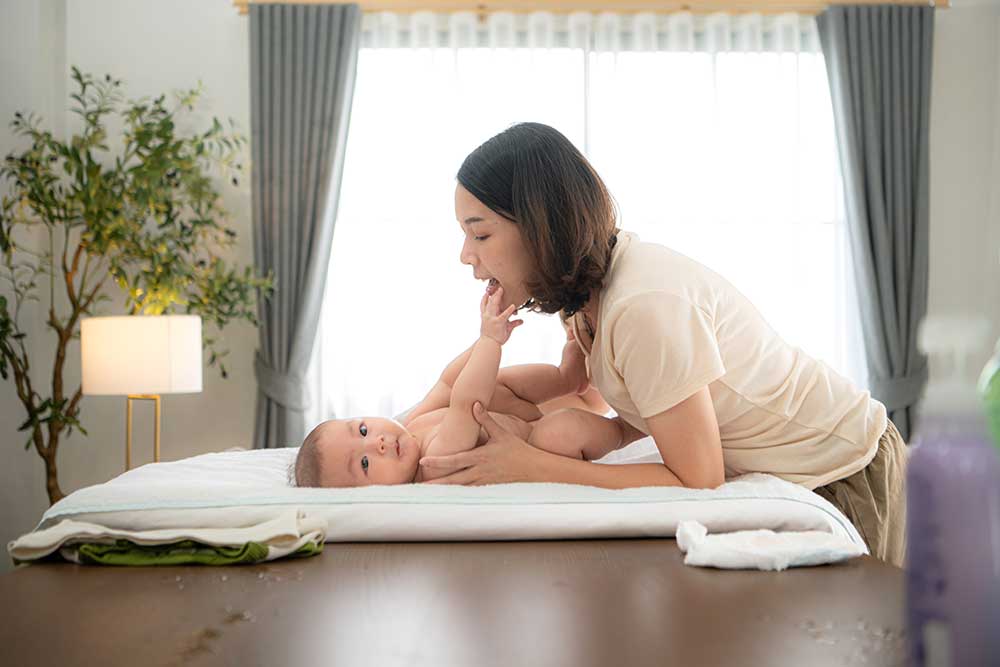
Creating a calm environment for infant massage is essential, especially when you want to nurture that precious bond with your little one.
Think of this space as sacred—a haven for connection and love. Reflect on how small adjustments can create a nurturing atmosphere.
Consider this space a sacred haven, where every detail nurtures connection and love between you and your little one.
Consider these elements:
- Room Temperature: Keep it around 25°C, warm enough for your baby.
- Lighting: Dim the lights, inviting serenity into your space.
- Sound: Play soft lullabies or gentle nature sounds.
- Surface and Positioning: Use a soft towel or blanket. Make sure you’re comfortable too.
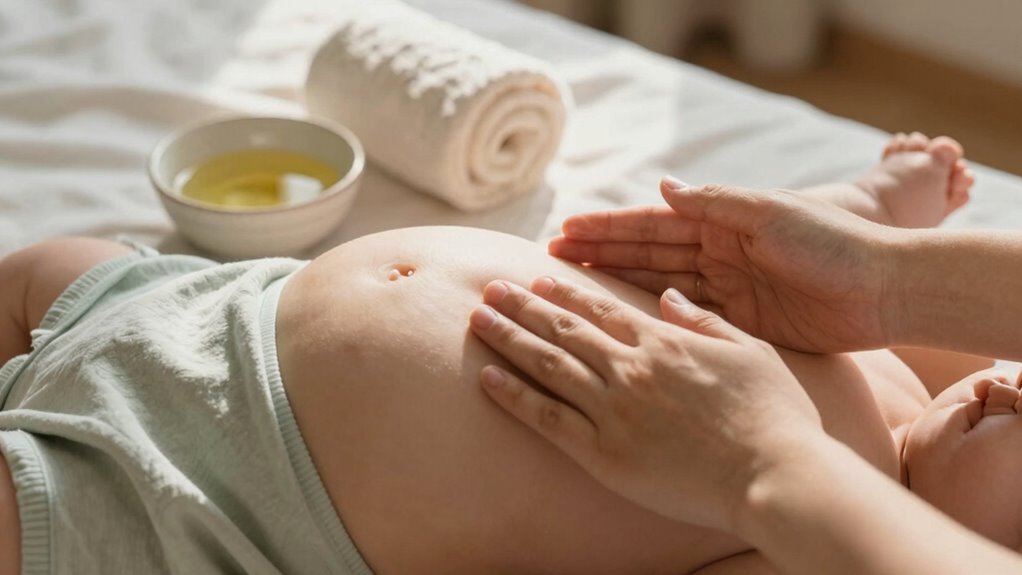
- Preparation and Oils: Gather your supplies, choosing safe, natural oils, as baby massage is a great way to bond with your little one.
This nurturing touch experience is rooted in ancient traditions combined with modern science, ensuring you’re providing the best care for your infant. Can you feel the tranquillity? This sacred time nurtures both spirit and bond.
Signs of Overstimulation and Fatigue in Infants
After setting the stage for a nurturing infant massage experience, it’s equally important to be attuned to your baby’s needs.
Recognising signs of overstimulation and fatigue lets you respond with love. Does your baby look away, cover their face, or clench their fists? These cues might signal they’re overwhelmed.
Pay attention to the pitch of their cries; an escalating wail often indicates distress. Behavioural withdrawal, like refusing to nurse or becoming clingy, also points to fatigue. The presence of caregivers is important for development, so ensure you are attentive and responsive to your baby’s signals. A Certified Infant Massage Instructor can guide you in recognising these important developmental cues and responding appropriately.
As caregivers, we must promote peace. Remember, “Love is the first language.” By observing these signals, you honour your baby’s experience.
Welcome these moments as opportunities for connection, serenity, and comprehension. Trust your instincts; nurturing touch should feel joyous for both of you.