

How to Use Massage to Soothe Your Gassy Baby Safely
Watching your baby writhe in discomfort feels impossible to bear—but what if your own hands hold the answer? Most parents reach for remedies first, never realising that gentle massage might ease their baby’s distress faster than anything else. The right technique releases trapped air while building an intimate bond you’ll treasure forever. Learn the specific touches that transform your baby’s pain into peaceful sleep.
Identifying and Addressing Gassiness in Your Baby
How can you tell if your baby’s gassiness is just a fleeting discomfort or something more concerning?
Think of those precious moments when your little one cries more than usual, especially after feeding. You might notice them pulling their legs towards their belly, appearing bloated or uncomfortable.
While gassiness is quite common—affecting 60% of healthy infants—it’s essential to discern the signs. Look for gurgling tummy sounds, and if your baby struggles or refuses to feed, seek help. Swallowing air during feeding can contribute to gas issues, so ensure that your baby is latching correctly. Gentle infant massage techniques can provide natural relief from gas and support your baby’s digestive system.
Remember, your instinct as a caregiver is priceless. 🌟 Nurturing touch can be a life-changing tool. Addressing discomfort swiftly nurtures your bond.
As the saying goes, “To touch is to love.” Offer comfort, seek guidance, and accept the love that surrounds your path.
Preparing for a Soothing Baby Massage Session
As you prepare for a soothing baby massage session, remember that each moment spent nurturing your little one is a sacred bond, an extension of the love that surrounds you both.
Choose a time when your baby is awake and alert, ideally 45 minutes after feeding. Create a calming environment by dimming the lights and maintaining a cosy room temperature of at least 24°C.
Wash your hands, and consider using a gentle, edible oil, testing it first on your baby’s skin. Research shows that routine touch increases eye contact by 50% and positive expressions by 3 times, enhancing your connection. The five-week structure of a baby massage course allows you to gradually learn proper techniques while preventing over-stimulation.
Lay your baby on a soft surface, like a towel, ensuring they’re comfortable and secure. Gather all your supplies close at hand.
Sit comfortably, ready to share this beautiful experience of connection and love.
Prioritising Safety and Comfort During Baby Massage
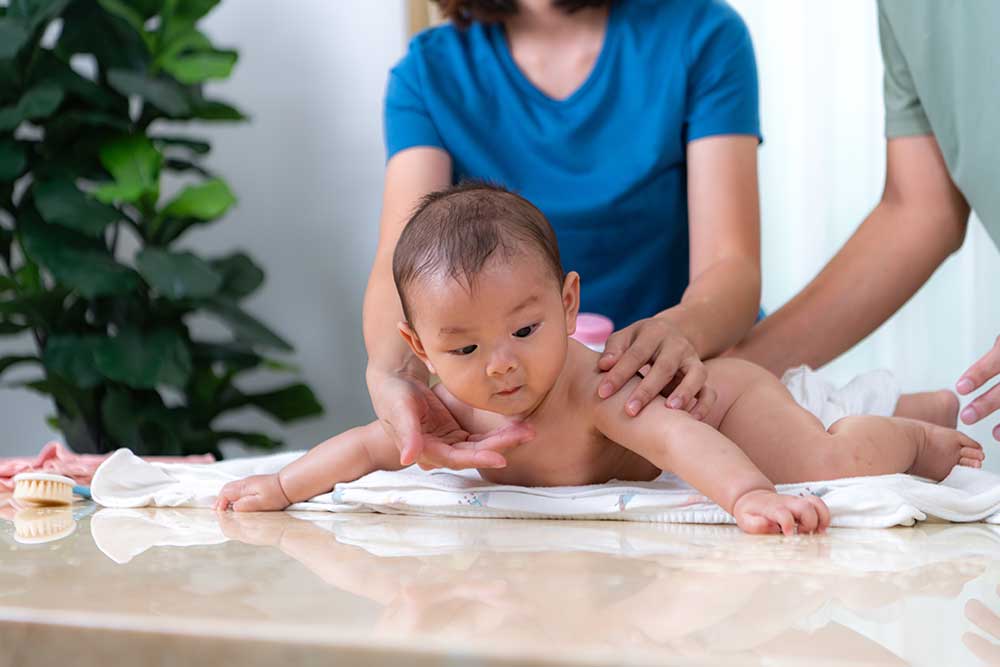
Creating a nurturing atmosphere for your baby’s massage experience is about more than just technique; it’s about prioritising their safety and comfort. You’re not just providing relief, you’re building a bond through touch. With each gentle stroke, you embody love and care.
Here are key aspects to focus on:
- Choose peaceful timing: Wait until your baby is calm and relaxed.
- Set the environment: Use a warm, tranquil space with cosy surfaces. It is essential to maintain a warm environment to prevent your baby from feeling cold during the massage. Consider taking a certified infant massage class to learn proper techniques for creating the ideal conditions.
- Monitor cues: Observe their reactions and adjust accordingly.
- Use safe products: Select baby-friendly oils, avoiding harsh chemicals.
- Stay close: Keep constant supervision, ensuring they’re safe and secure.
Effective Baby Massage Techniques to Relieve Gas
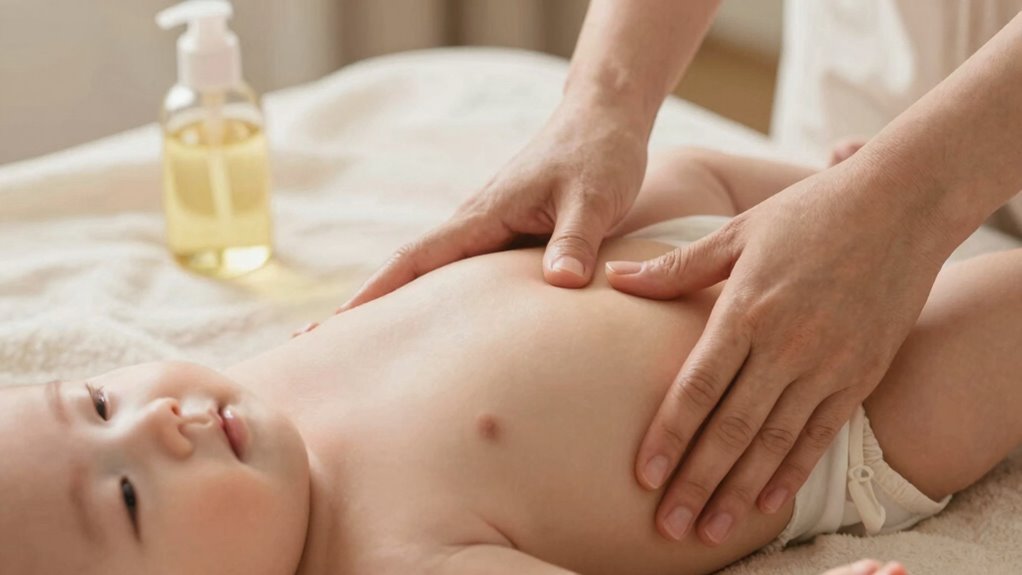
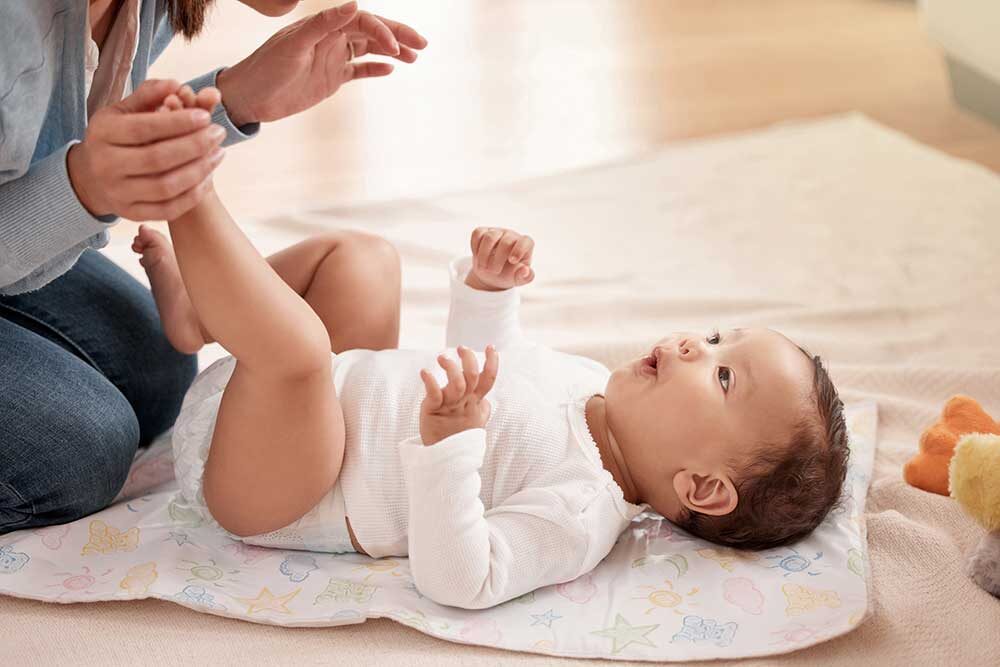
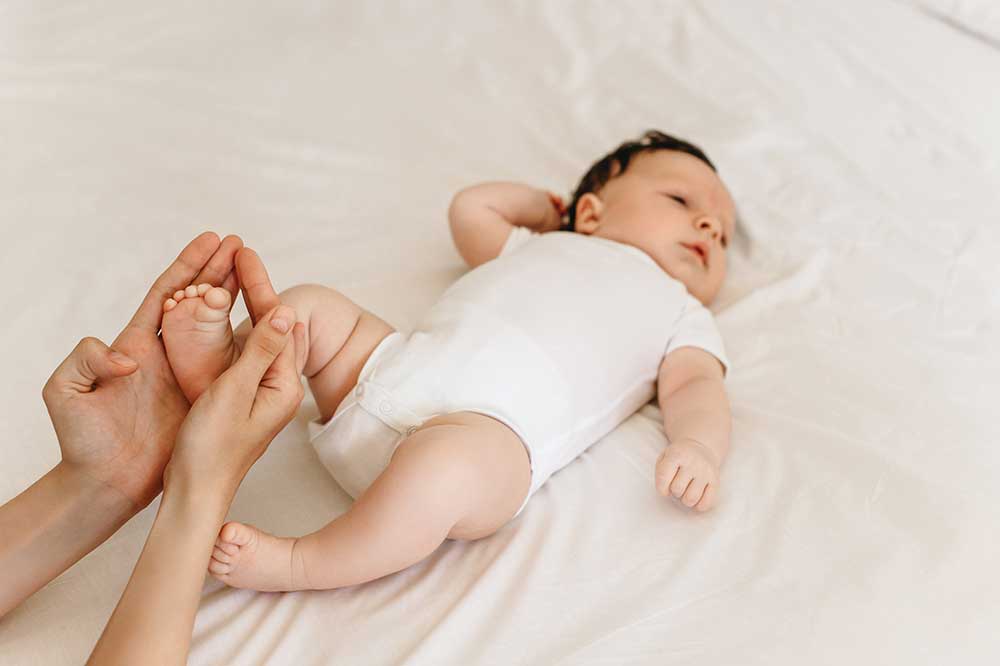
While your baby may be experiencing discomfort due to gas, knowing effective massage techniques can be a source of relief and connection. Use gentle, clockwise strokes on your baby’s belly, starting at 7 or 8 o’clock, following the path of their large intestine. Envision your hands as the hands of a clock, soothing and tender. Gentle, rhythmic movements can enhance the effectiveness of the massage, allowing for deeper relaxation and relief. Bicycle their legs in the air, allowing trapped gas to escape while nurturing trust. These nurturing touch techniques have been shown to provide relief from gas and colic for infants. Feel the warmth of your love in each stroke. The chest butterfly motion, spreading joy outward from the heart, can also ease distress. As you massage, remain sensitive to your baby’s cues, honouring their needs.
When Should You Talk to Your Paediatrician About Your Baby’s Discomfort?
When should you reach out to your paediatrician about your baby’s discomfort? Trust your instincts as a parent. Your love fuels your child’s well-being, so stay attentive.
Here are key signs to take into account:
- Fever: Any temperature over 100.4°F in newborns is urgent.
- Dehydration: No wet nappy in over 8 hours or dark urine needs attention.
- Vomiting: Repeated episodes or mixed with dehydration call for guidance.
- Extreme irritability: If your baby remains fussy, they may need care.
- Abdominal pain: Crying persistently for over 8 hours warrants a call. Contact a doctor for newborns with any elevated temperature to ensure proper care.
Your baby’s voice matters. Responsiveness nurtures their path; a gentle inquiry can bring peace.