
Most parents think baby massage is universally safe—but they’re wrong. While touch strengthens your bond with your newborn, certain oils, techniques, and body areas can actually harm delicate skin and vulnerable systems. You probably aren’t aware of the specific restrictions that paediatricians quietly emphasise. Learn which common massage practices put your infant at risk and which methods genuinely protect their wellbeing while deepening your connection.
Recognising Signs of Overstimulation in Newborns
As you commence on the beautiful expedition of parenthood, it’s essential to recognise the subtle signs of overstimulation in your newborn. Your child’s well-being is a sacred responsibility. You might notice them turning their head away or showing reluctance to be touched. Watch for jerky movements or clenched fists; these may indicate distress. Paying attention to their cries, especially if they escalate, can guide you in comprehending their needs.
Consider these signs:
- Withdrawal from stimuli
- Hyperactive motions
- Increased fussiness or irritability
A mother’s intuition, like a guiding light, can reveal when your newborn feels overwhelmed. It’s important to remember that overstimulation can result in oxygen desaturation or bradycardia, which can indicate that your newborn needs a calmer environment. Learning to read and respond to your baby’s subtle cues builds trust and demonstrates respect for their individual capacity for stimulation.
Applying Safe Pressure Techniques for Newborn Massage
When you’re ready to welcome the tender practice of newborn massage, safe pressure techniques are key to nurturing your little one’s well-being.
Accept the art of deep-touch pressure; it soothes your baby’s nervous system, calming breath and heartbeat. Start light, observing their cues, and gradually build to a comforting pressure that aligns with love. The International Association of Infant Massage provides comprehensive guidance on proper technique application for optimal results.
Embrace deep-touch pressure to soothe your baby’s nerves, fostering a calm heartbeat and breath through loving connection.
- Glide your hands smoothly along tiny limbs, maintaining gentle, rhythmic strokes.
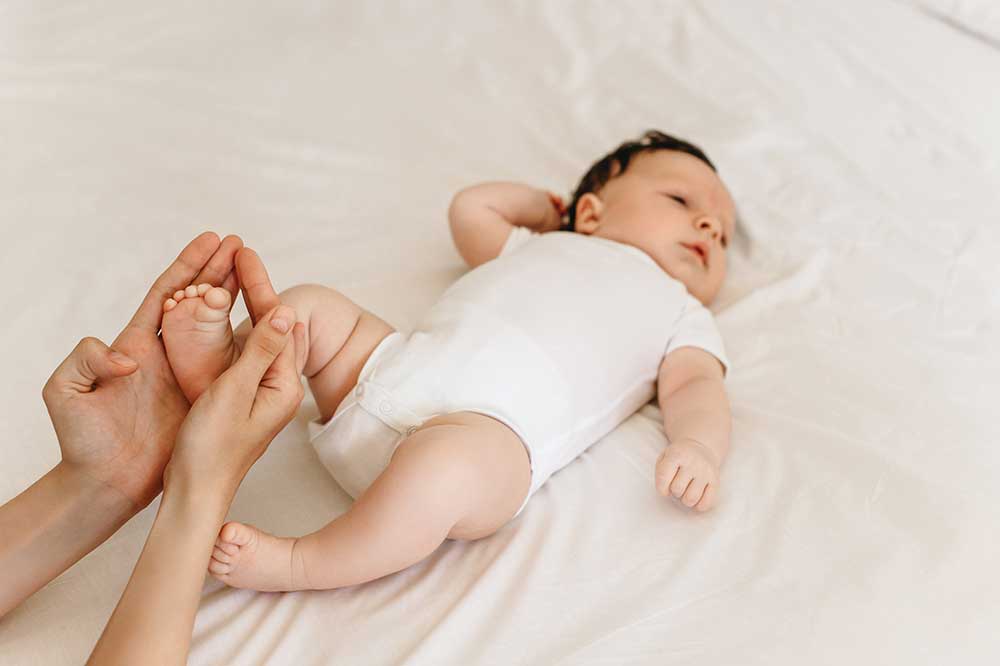
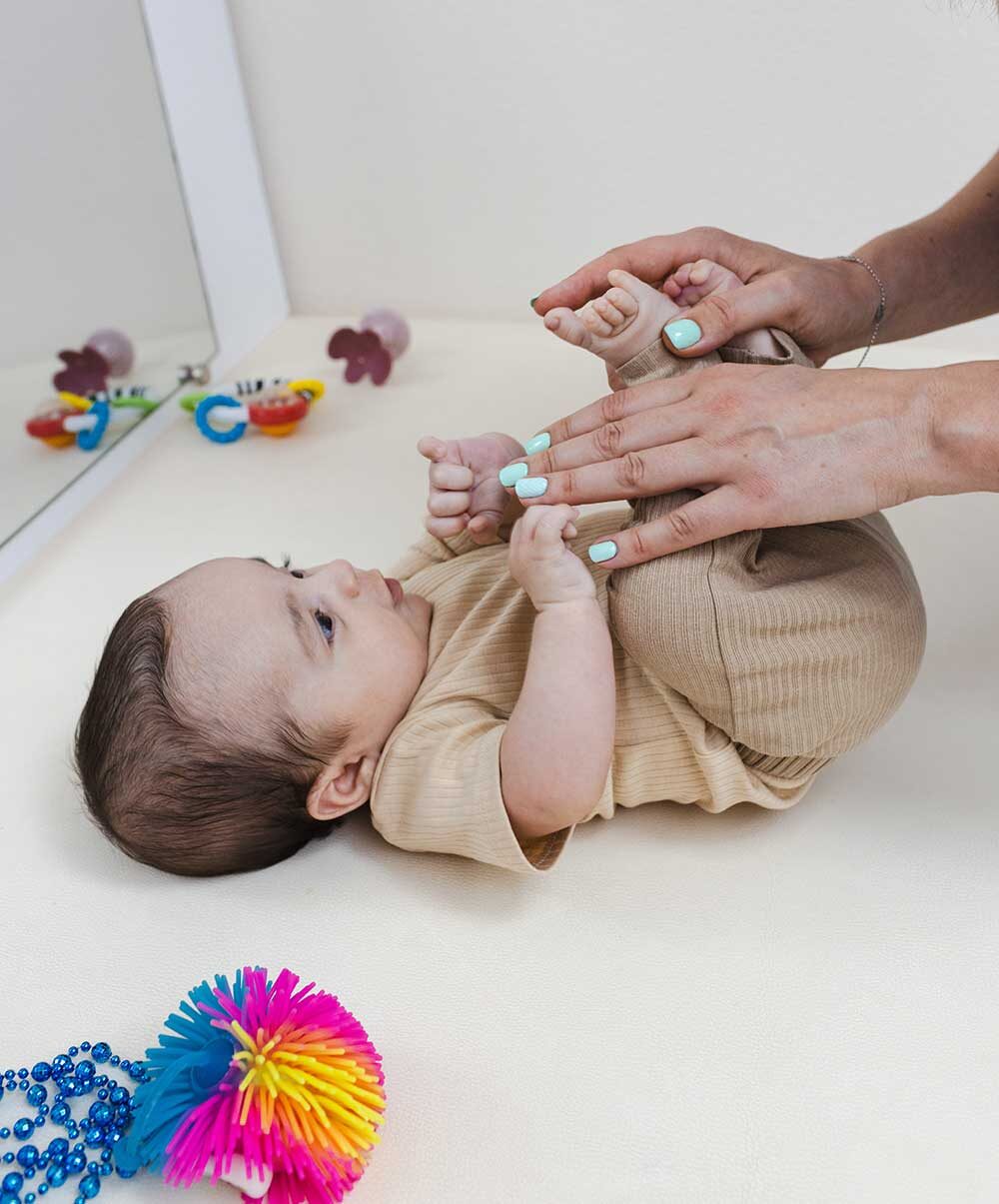
- Accept the C-shape technique for their arms and legs, nurturing security.
- Use firm yet tender strokes on their chest and back, promoting relaxation and noting that this practice ultimately facilitates bonding and attachment.
As you connect through touch, ask yourself: aren’t we all seeking that loving bond?
Let your hands speak the language of love, guiding your newborn to serenity.
Choosing Baby-Safe Oils for Sensitive Skin
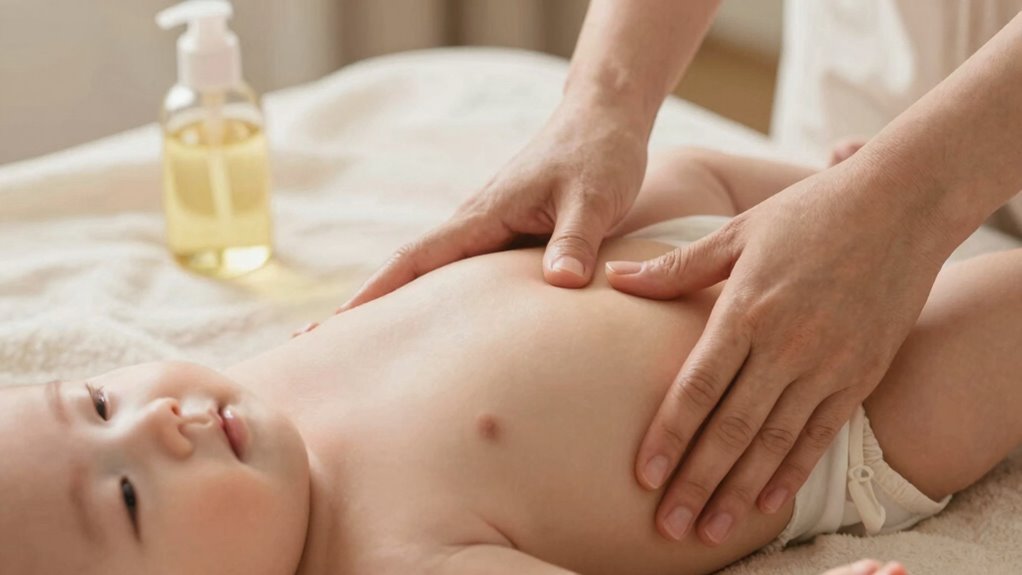
It’s essential to nurture your baby’s skin with the gentlest ingredients. 🌿 Consider cold-pressed jojoba oil, rich in healing properties and vitamin E, perfect for soothing eczema. Additionally, coconut oil is known to improve skin strength and moisture, making it another safe choice. Borage seed oil, packed with gamma-linolenic acid, can heal sensitive patches. Why not try oat oil for dry, itchy skin?
However, avoid mineral oils or tea tree oil, as they can irritate. A Certified Infant Massage Instructor can provide personalised guidance on which oils are safest for your baby’s individual skin needs.
Remember, less is more regarding essentials. You want to welcome your little one in comfort, so perform a patch test before full use, ensuring peace of mind.
Your thoughtful choices create a loving sanctuary for your baby.
Timing Your Baby’s Massage
Nurturing your baby through massage can be a beautiful way to deepen your bond, but timing is everything. Choose moments when your little one is in a quiet alert state—eyes wide, calm, and ready for connection.
Nurturing through massage strengthens your bond; find those peaceful moments when your baby is calm and ready to connect.
These precious windows allow for meaningful touch and interaction. Avoid massaging right after feeding; give at least 30-45 minutes for comfort. Steer clear of times when your baby is hungry, overtired, or asleep. The baby-led approach of respecting your infant’s natural rhythms ensures you’re working with their developmental needs rather than against them.
Consider gentle sessions after naps, during evening routines, or following a warm bath. Isn’t it rewarding to witness your child’s contentment as you massage? Infant massage can greatly enhance physical and emotional well-being, making these moments even more special.
When you align your touch with your baby’s cues, you create sacred moments that nurture love, trust, and security.
Setting Up a Safe Massage Environment for Newborns
Imagine wrapping your little one in warmth, where every sensation speaks love. To prepare, control the room’s temperature, keeping it cozy and draft-free. Dim the lights to promote a calming ambiance, and perhaps play soft melodies to soothe both of you. This tranquil atmosphere enhances sensory engagement and supports the overall massage experience.
Choose a stable surface, like a blanket on the floor, ensuring safety. And before you begin, wash your hands, and have gentle oils ready. The techniques you use should be simple and easy-to-learn strokes that foster secure attachment between you and your baby.
With intention and care, you’re not just massaging; you’re communicating in the language of touch, building a loving foundation.
Avoiding Sensitive Areas During Infant Massage
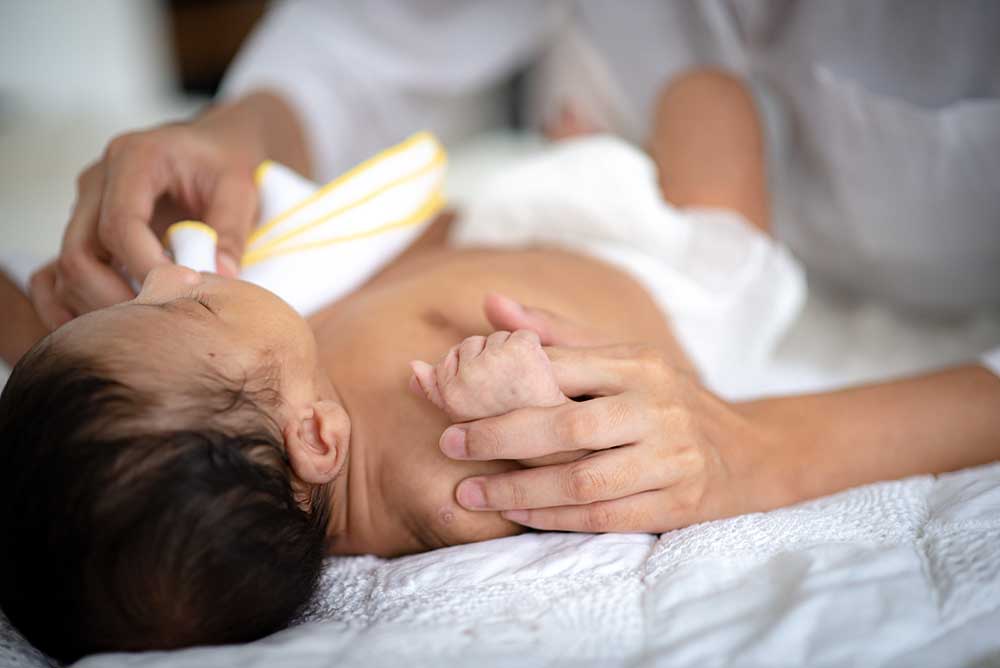
While the warmth of your touch envelops your newborn, it’s essential to stay mindful of sensitive areas that require special care. Avoid massaging the fontanelles—those gentle soft spots on their head—to prevent injury.
It’s a sacred trust, ensuring their fragile little bodies are protected. Don’t touch the genital or facial areas, as any pressure there can lead to discomfort or even harm.
Remember, their skin is delicate; steer clear of any rashes or injuries. When caring for your baby, be aware that newborn skin is more vulnerable, which means your massage techniques should be gentle and cautious. Staying informed through exclusive workshops on infant wellness helps you master safe techniques.
When you massage, keep your focus on what feels right for your baby. Isn’t it comforting to know your love and awareness help create a safe space for them? 🌟
Cherish the expedition of connection while honouring their unique needs.
Responding to Baby’s Cues: Stopping Massage When Necessary
Comprehending your baby’s cues is essential, especially regarding knowing when to stop a massage. When your little one shows signs of discomfort or distress, it’s crucial to honour their needs.
Just think of this: the best love is responsive love.
Look for these indicators:
- Grimacing, fussy movements, or a distant gaze
- Unusual tension in their body or heightened fussiness
Have you noticed your baby yawning or appearing drowsy? This might signal exhaustion, reminding us to pause. Learning to recognise these signals is part of the IAIM approach taught in certified infant massage classes.
Every touch should nurture connection and joy, not overwhelm. Remember, true care lies in listening.