
Meta Description:
Colic doesn’t have to steal your sanity. While countless parents resign themselves to sleepless nights, infant massage offers something most paediatricians barely mention—a tactile solution that transforms those piercing cries into peaceful silence. Discover the specific hand techniques that rewire your baby’s nervous system and why this ancient practice works where modern medicine falls short. Your nights are about to change.
Why Understanding Colic Is Crucial for Parents
As you steer through the challenging odyssey of parenthood, grasping colic can feel like revealing a vital piece of your baby’s puzzle.
It’s essential to comprehend that colic isn’t your fault; it’s a phase many infants face. By recognising its signs—like high-pitched crying or a tense abdomen—you build compassion for your baby’s struggle.
Comprehension of these episodes helps you remain calm during peak frustration. Aren’t we all looking for a way to connect deeply? Effective management of colic may involve understanding its symptoms and seeking appropriate remedies. Research shows that infant massage can provide natural relief from gas, colic, and constipation while supporting your baby’s overall well-being.
Embrace the odyssey with knowledge.
- Know that colic peaks around six weeks and often fades by months four or five.
- Realise colic cries differ from regular cries, signalling a unique need for care and patience.
As you learn, you’ll nurture a bond rooted in love.
How Infant Massage Eases Colic and Aids Sleep
In the quest to soothe a colicky baby, many parents find that infant massage can be a life-changing practice.
Imagine holding your little one, and with gentle strokes, you create comfort and connection. This nurturing touch isn’t just soothing—it can ease those painful colic symptoms, too.
Studies reveal that infant massage greatly reduces crying and improves sleep patterns, helping your baby find peace. Infant massage can be incorporated into a calming bedtime routine that enhances the overall sleep quality for both you and your baby.
Touch stimulates the release of calming neurotransmitters, promoting emotional security and relaxation. Regular massage can even improve digestion, dispersing gas and soothing muscle spasms. The International Association of Infant Massage offers comprehensive training programmes to help parents and caregivers learn proper techniques for supporting their infant’s wellbeing.
Isn’t it beautiful how a simple act of love can alter restlessness into calm?
Effective Techniques for Baby Massage
Revealing the art of baby massage can change your connection with your little one—it’s more than just a soothing routine; it’s a sacred practice that nurtures both body and spirit.
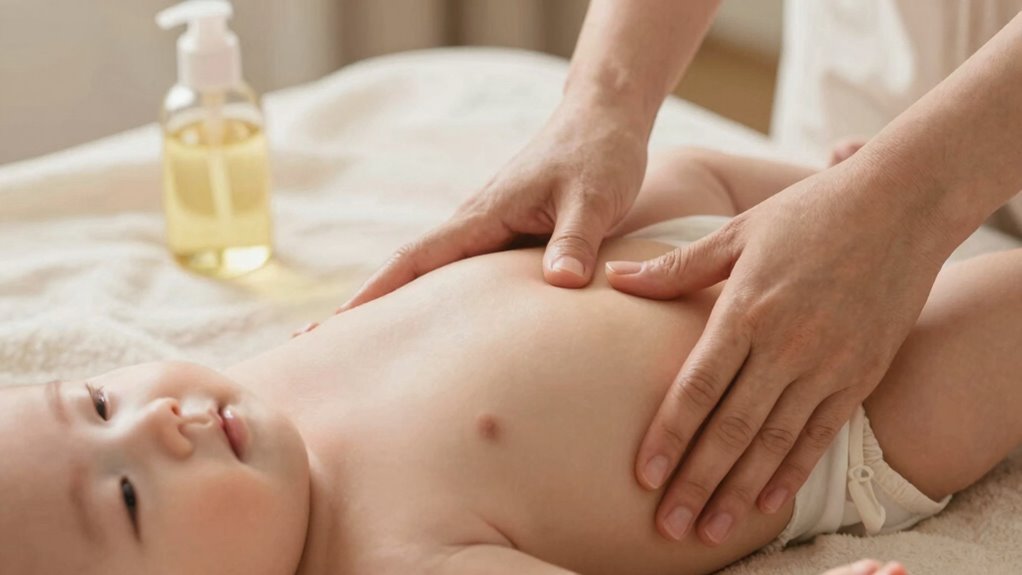
With each gentle stroke, you weave a fabric of love and trust. As you practise the “I Love U” massage, remember that it has been shown to reduce total crying time in colicky babies: trace an ‘I’ down their side, and follow with an upside-down ‘L.’ For abdominal relief, envision a clock, moving in a comforting circle.
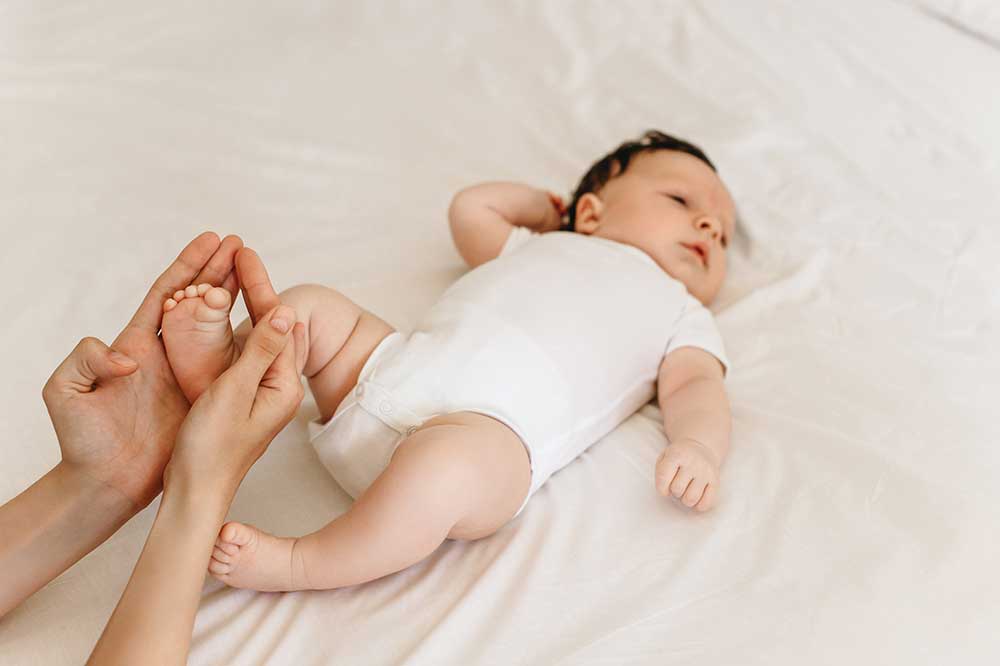
Feel the warmth of your hands as you gently bicycle their legs and use soothing foot strokes for relaxation. The five-week structure of a baby massage course allows you to gradually learn these techniques without overwhelming your infant.
Let each touch be a prayer, a chorus of love.
After all, what could be more meaningful than nurturing your child’s spirit with the language of touch?
What You Need to Know About Safe Baby Massage?
Before you commence the beautiful expedition of baby massage, it’s essential to prioritise safety, ensuring that each tender moment is filled with love and trust.
Imagine the warmth of your connection deepening with each gentle stroke. To do this effectively:
- Choose a calm moment, like after a bath, when your baby is happy.
- Create a cosy, soft environment, free of distractions. Maintain a warm and tranquil room for the massage.
- Use only safe, gentle oils, and always test a small area first.
- Focus on firm, rhythmic strokes, avoiding sensitive spots.
- Be attentive to your baby’s cues; if they fuss, pause to reassure.
IAIM-certified instructors emphasise that nurturing touch improves sleep and boosts the immune system, providing relief from gas and colic for infants.
As a caregiver, ask yourself—how can you nurture this precious bond?
Benefits of Infant Massage Beyond Colic Relief
When you welcome the art of infant massage, you’re not merely providing relief from colic; you’re initiating an expedition that nurtures thorough growth and connection.
Imagine holding your little one, sensing the bond deepen with each gentle stroke. This practice not only assists weight gain but also strengthens pain relief and improves sleep. Have you felt that joy? Studies have shown that early care for preterm infants leads to improved survival and health outcomes, which can start with these nurturing touches. Working with Certified Infant Massage Instructors ensures that you learn techniques grounded in training and safety for your baby’s wellbeing.
As you massage, oxytocin flows, forging a sacred attachment. Your baby begins to thrive, resting longer, crying less, and absorbing the warmth of your love.
Consider these benefits:
- Improved mother-infant bonding
- Raised oxygen saturation
- Reduced stress for both of you
Isn’t it beautiful how a simple touch can ripple through your lives?